
Hardwood · laminate · more
Flooring installation in Point Pleasant Borough, NJ.
Compare hardwood, laminate and wood restoration in Point Pleasant Borough, NJ. Plan the complete project with Core Step Flooring of Manalapan.
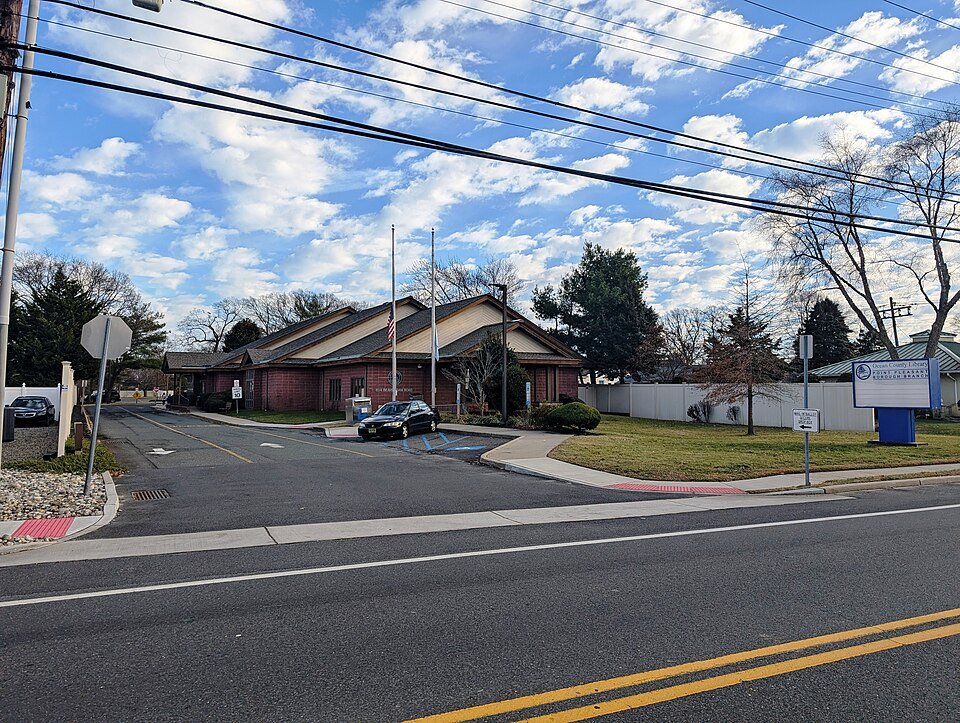
Plan your flooringBorough hall, Point Pleasant, New Jersey · Mr. Matté (if there is an issue with this image, contact me using this image's Commons talk page , my Commons user talk page , or my English Wikipedia user talk page ; I'll know about it a lot faster) · CC BY-SA 4.0 · Resized and cropped for display.

Your home. Your floor.
For a Point Pleasant Borough home, Core Step Flooring of Manalapan can compare new hardwood and laminate and assess whether repairs and refinishing could preserve existing wood. Explain the result you want across the whole space, including any hallway or adjoining room that will stay unchanged. Ask how the proposed work handles color, repaired areas, preparation and transitions, with the same room boundaries in each option. If property records are relevant to a wider renovation, use Point Pleasant Borough’s own resources and share the useful history with the assessor; those records do not establish today’s floor condition. Keep the proposal focused on the actual rooms, with furniture, removal and the remaining readiness decisions understood before ordering.

Use Point Pleasant Borough's own property resources
Point Pleasant Borough's Public Works page links separate resources for recycling, trash-related collections and water and sewer. For a floor replacement, use the resource that matches the actual task. A question about packaging is different from a question about discarded floor material, and neither should be answered by assuming that Point Pleasant Beach's arrangements apply. Give the borough name and property address when checking a collection or access issue. Ask Core Step to state whether removal and hauling belong to its scope.
If you plan to clear a room yourself, identify which items are household belongings and which are part of the flooring assembly. Establish the accepted disposal arrangement before starting removal. Keep any owner-arranged hauling compatible with the installer's route and work sequence. A written proposal should distinguish the surface to be supplied from the old material to be removed, so the owner can compare complete jobs. Do not treat the existence of a municipal recycling page as confirmation that every discarded layer is eligible for its program.
Existing permit records and new approval are different questions
The borough's Building, Code Enforcement and Zoning page directs residents and contractors to its SDL parcel and permit portal. It says permits before 1993 require an OPRA request. If records matter to a wider renovation, use that distinction to ask for the right information. A visible online record is useful background, but it does not establish the condition of today's floor or approval of a proposed alteration. Ask the responsible office about the actual work rather than inferring an answer from a record's presence or absence.
The same page describes building permit review and identifies zoning, floodplain management and engineering among possible prior approvals for applicable applications. Describe the connected project fully, especially if another trade will change what lies under or beside the floor. Ask which decisions must be settled before flooring begins. Keep the answer with the scope and have one person coordinate the sequence. A simple finish enquiry should not be inflated into a structural project, but a structural project should not be presented as a finish change merely because flooring is the last visible step.

Assess the existing hardwood before changing the assembly
If the property has wood you may want to keep, begin by listing the reasons for considering replacement. Is the issue color, isolated damage, the relationship between rooms or a wish for a different appearance? Ask Core Step to assess whether repairs, sanding, staining and refinishing could address those priorities. Show the entire room and its retained edges in photographs. An assessment needs the actual wood and condition; an old permit or a townwide description cannot establish whether restoration is suitable.
Ask what limitations would remain after the proposed work. Discuss repaired sections, visible variation and the treatment of rooms that will not be refinished. If the owner wants to change only one area, agree the exact stopping point and inspect the view from adjoining rooms. Compare restoration with replacement over the same boundaries and furniture assumptions. An option that includes the hallway is different from one that ends at the doorway. Keeping that distinction clear makes the appearance, removal and access consequences of each option easier to judge.
Select laminate or hardwood with the whole doorway in view
When comparing new flooring, look beyond the center of the room. Ask how each hardwood or laminate proposal will meet doors, stairs, fixed cabinets and retained floor finishes. Request the exact product, installation method and accessories. A similar plank color does not establish the same assembly or edge treatment. Keep the product information beside the proposed transitions so the visual choice and practical detail are approved together. If there is a later substitution, revisit both parts of that decision.
Describe the room's daily use, furniture and cleaning expectations. If the space serves more than one purpose, explain which activities matter most instead of asking for a universally best material. Take samples to the actual room and view them beside retained flooring. If continuity is important, ask which transitions still belong to the selected system and how they will look. Carpet or a runner, luxury vinyl, tile and stone can be considered for particular areas, while keeping residential hardwood and laminate as the main comparison where those are your priorities.

Use the records to improve coordination, not to guess condition
An owner may find information in the parcel portal that helps identify a previous renovation. Share relevant records with the person assessing the work, but describe separately what you know from living in the home. A record of work is not proof that every concealed layer remains sound, and a missing record is not proof that the floor is defective. If the history is uncertain, ask what can be investigated safely at assessment and what remains unknown until removal.
For a project involving several trades, make a short sequence that identifies each readiness decision. The person doing earlier work should confirm completion and any required inspection; Core Step should then assess the surface it is expected to cover. Keep photographs or written findings with the owner-approved changes. This approach is more useful than giving every contractor a different fragment of the history. It also lets the owner distinguish an unexpected preparation need from work that was already known but omitted from one proposal.
Plan access, furniture and preparation together
If the household stays, mark the essential rooms and the route between them. Ask where belongings can be stored without blocking the work or the removal path. Confirm who moves large furniture, whether any item needs separate handling and how furniture returns under the selected product's instructions. If the property has a shared entrance or management requirements, provide the actual rules before scheduling. Those conditions should be confirmed for the premises, not assumed because of the borough name.
Ask what base preparation is included and how additional findings are approved. Known water or repair history should be disclosed accurately, without turning general floodplain resources into a claim about every Point Pleasant property. Review door clearances, retained trim and material changes at measurement. Identify work by others and include it in the handover plan. The room should be returned with agreed transitions, cleanup and care instructions, and with any remaining task clearly identified, so a completed surface is not confused with a fully usable space.

Turn the Point Pleasant plan into a complete enquiry
Core Step Flooring of Manalapan's business base is 4 Bridge Plaza Dr, Suite 1C, Manalapan Township, NJ 07726. Send the Point Pleasant Borough address, room list, approximate dimensions and photographs of existing floors and adjoining surfaces. Explain what stays, what you hope to change and whether you want restoration assessed alongside replacement. Add relevant property records when they clarify connected work, and state who can approve changes. Include access and household timing constraints early.
Request alternatives using the same room boundaries, with exact products, removal, hauling, preparation, transitions and furniture responsibilities. Check construction questions through Point Pleasant Borough's own office and keep the response with the proposal when it affects sequencing. A supplemental commercial project should identify use and operating constraints separately. Before ordering, resolve the difference between record research, required approval and the installer's assessment of actual conditions. Each answers a different question, and the owner needs all applicable answers to make the flooring project ready.
Choose your direction
Explore the flooring for your rooms.
Point Pleasant Borough flooring questions
Which Point Pleasant does this guide cover?+
This guide covers Point Pleasant Borough, Ocean County, New Jersey, rather than Point Pleasant Beach Borough. Use the full address and municipality with Core Step and official departments. The borough's own Public Works and Building resources should guide local process questions, while the flooring assessment addresses the actual property's materials and conditions.
What if I need an older building permit record?+
Point Pleasant Borough's Building page directs parcel and permit enquiries to its SDL portal and states that permits before 1993 require an OPRA request. Ask for the specific record relevant to your project. Do not treat the record as a current inspection of the floor or as approval for new work.
Does every project need the prior approvals listed on the Building page?+
The page identifies possible prior approvals for applicable applications. Ask the responsible office about your full property-specific scope, including connected trade work. Do not infer a blanket permit requirement from the list or assume no approval is needed because the visible change is a new floor finish.
How do I compare refinishing with laminate replacement?+
Have the existing wood assessed, then compare defined scopes for the same rooms. Include the expected appearance, limits, furniture moves, removal, preparation, edges and conditions for use. Ask how repaired wood may differ and how the laminate assembly would meet retained rooms, so the choice reflects the whole project.
What should I do if records and my observations differ?+
Give the assessor both pieces of information and explain which details are confirmed and which remain uncertain. Ask what further investigation is needed before the proposed work covers the area. Keep an unanswered history question visible in the scope instead of converting it into an unsupported claim about the base.
Make the next step yours
Plan your Point Pleasant Borough flooring project.
Keep the rooms, material direction and preparation details together.
Explore Ocean County flooring or find another town.