
Hardwood · laminate · more
Flooring installation in Chesterfield Township, NJ.
Plan hardwood, laminate and wood restoration in Chesterfield Township. Review local project logistics and a complete flooring scope with Core Step.
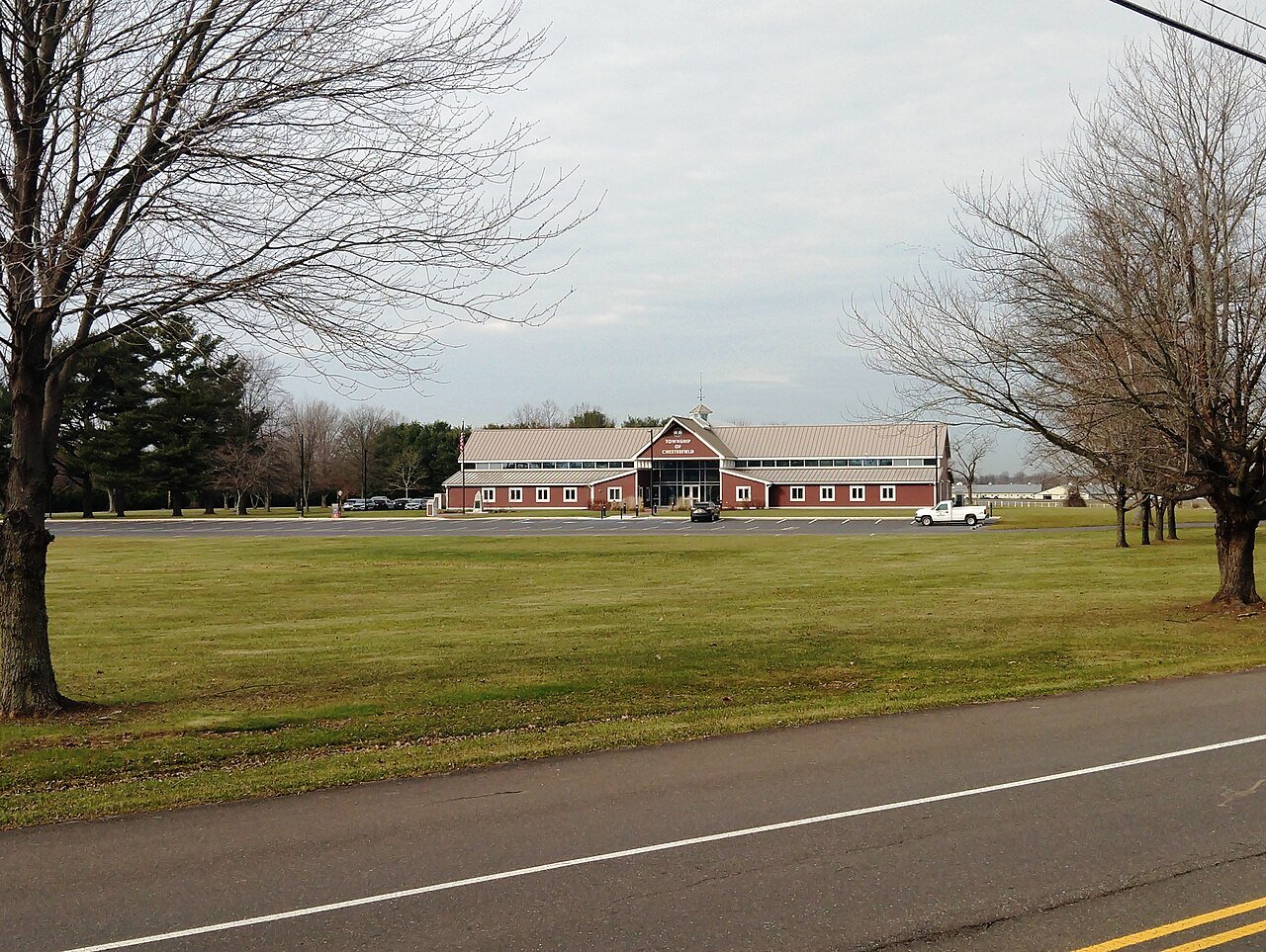
Plan your flooringChesterfield Township municipal building · Mr. Matté · CC BY-SA 4.0 · Resized and cropped for display.

Your home. Your floor.
For flooring installation in Chesterfield Township, NJ, Core Step Flooring of Manalapan can discuss residential hardwood, laminate and assessment of existing wood for repair or refinishing. Begin with a room plan and a clear list of removed materials. Chesterfield’s recycling brochure lists clean wood, but that should not be interpreted as approval for every old flooring product or contractor load. Confirm accepted disposal, supporting-surface preparation and thresholds before ordering the new floor.

Ask what qualifies as clean wood before planning a Chesterfield drop-off
Burlington County’s current Chesterfield recycling brochure lists clean wood among the materials at the Township drop-off site beside Public Works. It also lists separate household recycling streams and warns that drop-off hours can change. For flooring removal, do not assume every finished board, engineered product or mixed load qualifies as clean wood. Describe the actual material, fixings and contractor involvement and obtain an acceptance answer before planning a trip.
A floor-removal list should name the covering visible now, any known underlying layer and trim being removed. Keep clean delivery packaging separate from boards, underlay and mixed demolition debris. If you want to handle part of disposal yourself, ask about the actual product and its condition rather than describing it only as wood. Keep the response with the proposed load and identify what happens to material that is not accepted.
The brochure’s site-specific hours and closure information make timing another practical issue. Check current signage or Township information before treating a drop-off trip as the moment the room becomes clear. Ask who prepares, loads and transports an accepted household load. Compare that effort with a proposal that includes complete contractor removal to an accepted destination, rather than assuming the two arrangements involve the same responsibilities.
For eligible packaging, the brochure separately requires appropriate recycling preparation. Ask who handles cardboard and other delivery packaging and keep it distinct from the old floor. A material can arrive in recyclable packaging without the flooring itself belonging in that stream. The plan should identify the actual destination for each group instead of leaving the owner with a pile to classify after installation.
If a hauler or shared container handles the renovation material, identify the responsible person and when it leaves. Agree where removed material can wait without blocking doors or the carry route. Keep incoming product storage separate. A clear waste plan should describe both removal from the room and removal from the property, with no assumption that access to a local recycling site completes either task automatically.
Keep the Chesterfield construction enquiry tied to the full job
New Jersey’s municipal construction-code roster identifies Chesterfield Township in Burlington County and lists building, electrical, fire and plumbing enforcement functions. Use the enquiry route for that municipality when the floor accompanies a wider renovation. The roster is an official contact reference, not a permit determination or a promise about processing time. Describe the actual work and confirm the current office arrangements directly.
Give the office a description that distinguishes finish replacement from supporting-construction changes, altered openings or building-system work. Ask what applies to the complete scope. Do not apply an answer for a covering to a later structural change, or infer that a permit is required for every floor merely because a construction office is listed. Keep the actual answer with the proposal it considered.
If other work precedes flooring, identify when final room dimensions and access become reliable. Send the current drawing to Core Step and ask what can be assessed before removal. A municipal response and a practical floor assessment answer different questions. Each should be coordinated without treating one as evidence that the other has already been completed.
When a hidden condition changes the work, identify who reviews the finding and who can authorize a revised scope. If a responsible professional or municipal decision is needed, keep that step visible before the area is covered. An attractive product choice should not become the reason to move past an unresolved supporting-surface or wider renovation issue.

Compare hardwood and laminate across a consistent room plan
Mark every room, closet and passage in the proposed work and identify retained floors. Decide whether the new surface continues through connected openings or ends at a deliberate threshold. Ask Core Step to compare hardwood and laminate across those identical boundaries. Both alternatives should account for preparation and edge finishing so a material figure does not conceal a different extent of work.
For hardwood, review the proposed construction, board dimensions, finish and direction with the assessed site in mind. Explain how it should relate to any existing wood that stays. View physical samples beside that floor at home under your normal light. A similar name or photograph is not enough to promise that new boards and an existing surface will become indistinguishable.
For laminate, identify the exact collection and matching accessories proposed for the room boundaries. Ask for its written installation and care instructions. Discuss how the complete assembly meets the supporting surface and adjoining floors, keeping performance questions specific to that product and room. Do not use a feature of one laminate collection as an assumption about every other option.
Explain the household’s cleaning preferences, furniture movement and room use. If carpet, runners, luxury vinyl, tile or stone is suitable elsewhere, mark its boundary with the main plank project. Ask which finishing components connect the surfaces and who completes them. Different materials can form a considered plan when the junctions are chosen early rather than left until the installer reaches the doorway.
Give existing wood a condition assessment before replacement
If wood is exposed, ask Core Step whether repair or refinishing is feasible before approving removal. Explain known damage, previous work and the appearance you want. Discuss repair, sanding, staining and refinishing for the actual surface. Do not infer the condition of the floor from the Township location, a description of local buildings or another household’s restoration example.
If a covering hides wood, agree when it can be assessed after exposure and who approves a changed approach. Compare restoration and replacement using the same rooms and retained-floor boundaries. Update preparation, transitions and the waste plan if the decision changes. Retaining wood should not leave the rest of the proposal based on a removal quantity that no longer applies.
Where some wood remains untreated, review the relationship of finish and color at that boundary. Ask which repairs are included and what remains uncertain. A replacement alternative should similarly identify its new assembly and edges. Comparing complete scopes gives you a clearer decision than treating restoration and replacement as equivalent ways to change an area number.

Review preparation, doorway height and final responsibilities
Ask the installer to identify what supporting-surface assessment can happen now and what waits for removal. Have preparation described for the named product and agree how additional findings are reported and approved. Keep that practical assessment visible alongside the material selection. A sample does not resolve hidden layers, and a general administrative answer does not confirm installation readiness.
Photograph doors, closets, retained trim and adjoining floors. Ask about the complete proposed height, actual transition components and related finishing responsibilities. Include furniture movement and essential access in the work sequence. At handover, inspect those edges, confirm agreed removal from the property and receive care and return-to-use instructions for the exact product.
Retain the final collection, finish and room list with approved changes. Ask where spare material belongs under the supplied instructions. If the owner is not present during work, agree who receives photographs and revised scope details and who can authorize them. A clear final record helps later maintenance or another room project begin with what was actually installed.
Before disposal is booked, photograph the layers uncovered during assessment and ask the installer to describe them in the removal scope. Finished wood, underlay and attached backing may need different handling. Resolve responsibility for a rejected load before the removal date, including who arranges the alternative destination.
Send a Chesterfield flooring enquiry with the actual material list
Core Step Flooring of Manalapan is based at 4 Bridge Plaza Dr, Suite 1C, Manalapan Township, NJ 07726. Send the Chesterfield Township property location, room drawing, photographs and preferred hardwood or laminate through the contact page. Explain restoration interest, access constraints and removal preferences. Include any wider renovation stages and ask for the next assessment step. Before ordering, confirm the exact product, preparation, installation, trim, thresholds, furniture responsibilities and accepted disposal.
Choose your direction
Explore the flooring for your rooms.
Chesterfield Township flooring questions
Can all old flooring go into Chesterfield’s clean-wood stream?+
Do not assume that. The county brochure lists clean wood at the Township drop-off site, but that does not classify every finished board, engineered product or mixed renovation load. Describe the actual materials and contractor involvement and confirm acceptance. Have an agreed destination for any excluded material before removal begins.
Should I plan around the brochure’s drop-off hours alone?+
The current brochure warns that hours can change and directs residents to current site or Township information. Confirm the actual trip before depending on it. Identify who prepares, loads and transports the material and what happens if the intended arrangement is unavailable. Keep contractor waste responsibilities separate from eligible household handling.
Does the state construction roster determine my permit requirements?+
No. It identifies Chesterfield’s municipal enforcement entry and functions. Describe the complete renovation to the relevant office and ask what applies. Keep its response with the scope considered, especially if work affects the supporting construction or other systems. The roster itself provides neither a project approval nor a processing promise.
Can I compare keeping my wood with new hardwood or laminate?+
Ask for assessment of the actual floor and discuss feasible repairs or refinishing. Compare alternatives across the same rooms and thresholds. If wood is hidden, agree an examination and approval point after exposure. Update preparation and waste responsibilities when the approach changes so the final proposal describes the chosen work.
Make the next step yours
Plan your Chesterfield Township flooring project.
Keep the rooms, material direction and preparation details together.
Explore Burlington County flooring or find another town.